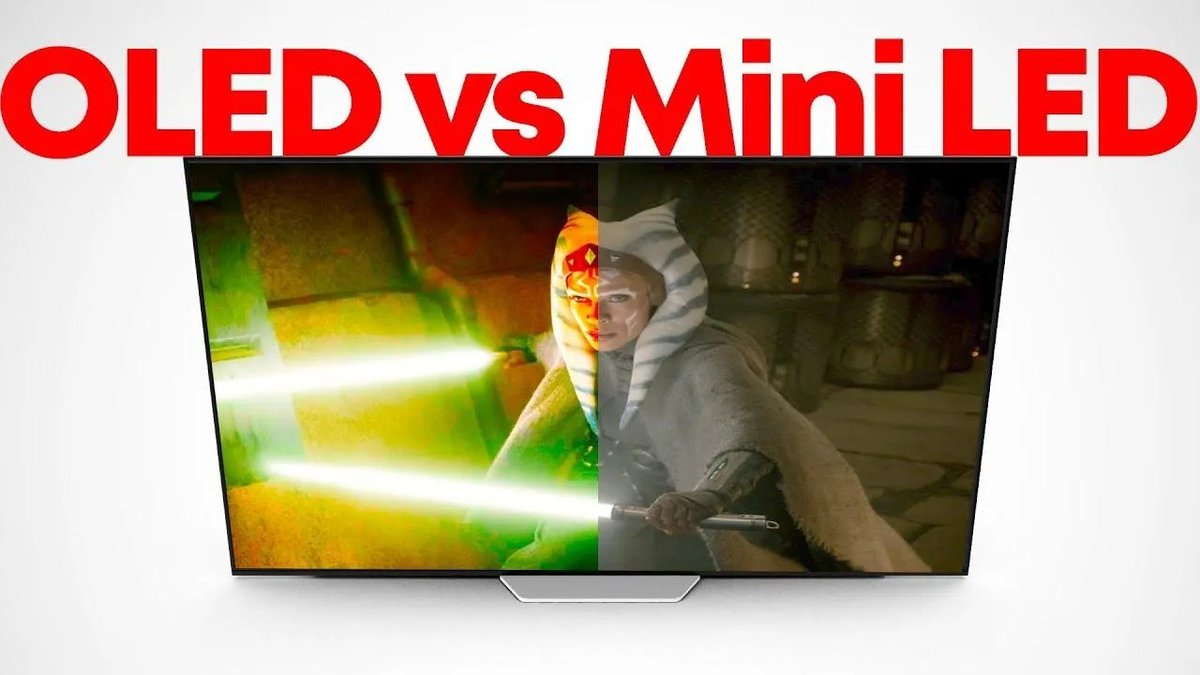
When it comes to upgrading your home theater, the sheer volume of acronyms—OLED, QLED, Mini-LED, and plain old LED—can feel like navigating a foreign language. You're not just buying a screen; you're investing in the portal to your entertainment, a device that shapes your movie nights, gaming sessions, and even the daily news. Choosing between these display technologies isn't about finding a single "best" option; it's about understanding their strengths and weaknesses to match the perfect TV to your viewing habits, room environment, and budget. This guide will cut through the jargon, comparing OLED vs. Competitors (QLED, Mini-LED, LED) to help you make an informed decision you'll truly enjoy.
At a Glance: Your Quick Tech Decoder
- OLED (Organic Light Emitting Diode): King of contrast, offering perfect blacks and stunning colors, best for dark rooms and serious cinephiles. Potential for burn-in with static images.
- QLED (Quantum Dot Light Emitting Diode): A souped-up LED-LCD, boasting incredible brightness and vibrant colors, ideal for well-lit rooms. Good value, but blacks aren't as deep as OLED.
- Mini-LED: An evolution of QLED/LED-LCD, using thousands of tiny LEDs for superior local dimming, bridging the gap between QLED and OLED in contrast and brightness. A fantastic all-rounder.
- Traditional LED (LCD with LED Backlight): The baseline technology, generally more affordable but with lesser contrast and uniformity compared to its advanced counterparts.
Understanding the Tech: What's Under the Hood?
Before we dive into the ultimate showdown, let's briefly define what each of these acronyms actually means. Knowing the fundamental differences makes it easier to grasp why one excels where another might fall short.
OLED: Pixels That Light Themselves
Imagine a canvas where every single dot can turn on or off independently. That's essentially OLED. Each tiny Organic Light Emitting Diode (OLED) pixel generates its own light. When a pixel needs to be black, it simply turns off completely. This self-emissive nature is the secret sauce behind OLED's legendary contrast and perfect black levels.
QLED: Quantum Dots for Punchy Colors
QLED (Quantum Dot Light Emitting Diode), primarily championed by Samsung, isn't a self-emissive technology like OLED. Instead, it's an enhancement of the traditional LED-backlit LCD (Liquid Crystal Display) panel. QLED TVs incorporate a layer of "quantum dots"—microscopic semiconductor nanocrystals—which, when hit by the LED backlight, emit extremely precise and vibrant colors. Think of it as a supercharger for color and brightness on a conventional LCD screen.
Mini-LED: More Backlights, More Control
Mini-LED is another significant leap forward for LED-backlit LCD technology. Rather than using large, relatively few LEDs for the backlight (as in traditional LED/QLED), Mini-LED TVs pack tens of thousands of much smaller LEDs behind the LCD panel. This dramatic increase in the number of backlights allows for far more granular "local dimming" zones. More dimming zones mean the TV can control brightness and contrast in smaller, more precise areas of the screen, greatly reducing light bleed and improving black levels compared to standard QLED.
The Ultimate Showdown: How They Stack Up
Now that we know the players, let's pit them against each other in the most critical performance categories.
Blacks So Deep, They're Infinite (Contrast & Shadow Detail)
This is where the cinematic magic happens. The ability of a TV to display true black, without any grayish glow, is fundamental to a truly immersive picture.
- OLED: The undisputed champion. Since each pixel can turn off completely, OLED achieves what's known as "infinite contrast." Blacks are pure, inky voids, allowing bright objects to pop with incredible intensity right next to them. This precision means shadow details in dark scenes are rendered with stunning clarity, making every subtle nuance visible.
- Mini-LED: A strong contender. Thanks to its numerous local dimming zones, Mini-LED delivers significantly improved black levels and contrast compared to standard QLED. It can dim specific areas of the screen much more effectively, getting remarkably close to OLED's performance in many scenes. However, it's still an LCD panel with a backlight, so in very challenging scenes (like a bright star on a black background), you might notice a slight "blooming" or "halo" effect around bright objects.
- QLED: The weakest in this category. While QLED offers great color and brightness, its fewer and larger backlight zones mean light can "bleed" into darker areas. This results in blacks appearing more like a dark gray, reducing overall contrast and sometimes obscuring fine shadow details.
Blazing Brightness & A Kaleidoscope of Colors
Different viewing environments demand different levels of brightness. A sun-drenched living room requires a different beast than a dedicated, darkened home theater.
- QLED: Excels in brightness and color vibrancy. QLED TVs leverage their powerful backlights and quantum dots to achieve incredibly high peak brightness levels. This makes them ideal for well-lit rooms where ambient light might otherwise wash out the picture. The quantum dots also ensure a wide and vibrant color gamut, making everything from nature documentaries to animated movies pop with dazzling hues.
- Mini-LED: Offers a fantastic balance. Mini-LED also boasts high peak brightness, often rivaling or exceeding QLED, while simultaneously improving color accuracy and contrast through its superior local dimming. It aims to give you the best of both worlds: bright, vibrant images that still maintain strong black levels.
- OLED: Delivers superior color reproduction and a wider color gamut, producing incredibly lifelike, deep, and nuanced colors, especially in darker scenes. However, OLED's peak brightness generally tends to be lower than that of QLED and Mini-LED. While modern OLEDs are plenty bright for most rooms, they might struggle slightly more in direct sunlight compared to their competitors.
Game On! (Gaming Performance)
For gamers, responsiveness is key. Input lag, refresh rate, and response time can be the difference between victory and defeat.
- OLED: A gamer's dream. Known for virtually non-existent input lag, incredibly fast response times (pixels change state almost instantly), and high refresh rates (120Hz and beyond), OLED offers an incredibly fluid and responsive gaming experience. This makes it ideal for competitive gaming where every millisecond counts.
- QLED: A very strong performer. Modern QLED TVs offer competitive gaming features like low input lag, high refresh rates, and support for Variable Refresh Rate (VRR) technologies like FreeSync and G-Sync. They provide a bright, vibrant, and responsive gaming experience that will satisfy most players.
- Mini-LED: An excellent and emerging option for gamers. With impressive brightness, low latency, and high refresh rate capabilities, Mini-LED sets are quickly becoming a favorite for those who want a bright, high-contrast gaming experience without the potential worries of OLED burn-in.
No Bad Seat in the House (Viewing Angles)
If you often watch with a group, how the picture holds up from the sides of the room is crucial.
- OLED: Unbeatable. Due to each pixel emitting its own light, OLED maintains perfect color accuracy and contrast even from extreme off-angles. Every seat in the room is the best seat.
- Mini-LED: Shows significant improvement. While not quite as perfect as OLED, Mini-LED generally offers much better viewing angles than traditional LED-LCDs, maintaining more consistent color and brightness across a wider range of positions.
- QLED: Can suffer from degradation. Like most LCD-based technologies, QLED TVs can experience some color shifting and a reduction in brightness and contrast when viewed from extreme off-angles. The sweet spot is generally front and center.
Beyond the Picture: Practical Considerations
The best TV isn't just about picture quality; it's also about how it fits into your life and budget.
The Price Tag: What's Your Budget?
Your wallet often has the final say.
- OLED: Generally the most premium option. If you're chasing the absolute best picture quality and are willing to pay for it, OLED is positioned at the top of the price ladder, especially for larger sizes. Learn if OLED is worth it and see if the investment aligns with your priorities.
- Mini-LED: Often seen as the "sweet spot" in terms of value. It offers a significant performance boost over QLED, approaching OLED quality in many aspects, but usually at a more accessible price point than top-tier OLEDs.
- QLED: A value-oriented choice. QLED provides a bright, vibrant picture at a more competitive price than OLED or Mini-LED, making it an excellent option if you want a premium experience without breaking the bank.
Longevity & The Burn-In Question
The dreaded "burn-in" can be a concern for some users.
- OLED: Potential for burn-in. While modern OLED TVs have advanced significantly with pixel refresh technologies and safeguards, there is still a theoretical risk of "burn-in" (permanent image retention) if static images (like news channel logos, game HUDs, or stock tickers) are displayed at high brightness for extremely long, continuous periods. For typical varied viewing, this is rarely an issue, but it's something to be aware of if your usage involves hours of static content.
- QLED & Mini-LED: Generally more durable and no risk of burn-in. As they are LCD-based with backlights, QLED and Mini-LED TVs do not suffer from burn-in. Their display panels typically offer a long lifespan, often rated up to 100,000 hours of use. This makes them a worry-free choice for those who might display static content for extended periods.
Powering Your Entertainment (Energy Efficiency)
While not usually a deal-breaker, energy consumption can vary.
- OLED: Consumes less power when displaying dark images (as pixels turn off) but can use more power at peak brightness levels compared to other technologies.
- QLED & Mini-LED: Tend to be more energy-efficient overall, especially in bright environments, with a more consistent power consumption profile due to their LED backlights.
The Brains of the Operation (Smart TV Features & OS)
Beyond the panel technology, the operating system (OS) and smart features greatly influence your day-to-day experience.
- Varies by Manufacturer: LG uses webOS, Samsung uses Tizen, Sony often opts for Google TV, and others use Roku TV or Fire TV OS.
- User Interface & App Access: Each OS offers a unique interface, app store, and set of smart features (voice assistants, smart home integration). Consider which ecosystem you prefer and which offers the apps you use most.
- Gaming Modes: For gamers, ensure the TV's OS and hardware support game-specific modes that reduce input lag and enable features like VRR (Variable Refresh Rate) and ALLM (Auto Low Latency Mode).
Your Room, Your TV (Installation & Layout)
Think about where your TV will live.
- Optimal Viewing Distance: A good rule of thumb is to sit about 1.5 to 2.5 times the screen's diagonal size away. Too close, and you'll see pixels; too far, and you'll miss details.
- Mounting vs. Stand: Wall mounting offers a sleek aesthetic and saves space, but requires professional installation or careful DIY. A stand offers flexibility in placement and easier access to ports.
- Lighting Control: For OLED, controlling ambient light is crucial to fully appreciate its superior contrast and black levels. Think about blackout curtains or blinds if you're installing an OLED in a very bright room. QLED and Mini-LED handle brighter rooms with more grace.
Making Your Decision: The Right TV for YOU
So, with all this information, which TV is right for your home theater? It boils down to your priorities.
For the Serious Cinephile & Dark Room Denizen: Choose OLED
If your priority is the absolute best picture quality, especially for movies and TV shows watched in a dimly lit or dark room, OLED is unmatched. Its perfect blacks, infinite contrast, and stunning color accuracy create an incredibly immersive, cinematic experience. While it comes with a premium price tag and the theoretical burn-in risk (which is largely mitigated with typical viewing habits), it delivers an unparalleled visual feast.
For Bright Living Rooms & Vivid Colors: Choose QLED
If your TV lives in a well-lit living room and you crave a bright, punchy picture with vibrant colors that can cut through ambient light, QLED is an excellent and often more affordable choice. It offers great overall performance for most content, from sports to family shows, without the potential burn-in concerns of OLED.
For the Best of Both Worlds (Performance & Value): Consider Mini-LED
Mini-LED truly hits the "sweet spot" for many users. It offers a significant upgrade in contrast and black levels over standard QLED, getting remarkably close to OLED quality in many scenarios, while retaining the high brightness and no-burn-in advantages of LCD technology. If you want a fantastic, all-around performer that delivers a premium experience without paying top-tier OLED prices, Mini-LED is a strong contender.
On a Tighter Budget, But Want Brightness: QLED is a Viable Pick
Compared to older, basic LED-LCDs, even entry-level QLEDs offer a noticeable boost in color and brightness. If you're upgrading from a much older TV and have budget constraints, QLED provides a good step up in picture quality for the money, especially if your viewing environment is bright.
Specific Use Cases: Tailoring Your Choice
- Competitive Gaming: OLED, QLED, and Mini-LED all offer excellent gaming performance with low input lag and high refresh rates. OLED still holds a slight edge for absolute responsiveness, but any of these technologies will provide a top-tier gaming experience if you choose a model with the right gaming features.
- 24/7 News or Stock Tickers: If your primary use case involves displaying static logos or information tickers for hours on end, you might want to lean towards Mini-LED or QLED to entirely avoid any theoretical burn-in concerns, even if modern OLEDs are robust.
Don't Forget the Sound!
A stunning picture deserves equally impressive audio. Many high-end TVs have decent built-in speakers, but for a true home theater experience, investing in a dedicated soundbar or a full surround sound system is crucial. A $1,500 TV with weak internal speakers won't deliver the immersive experience you're paying for.
The 8K Debate: Is It Worth It?
For most consumers, 8K resolution is not yet a recommended investment. Native 8K content is incredibly scarce, and at typical viewing distances, the difference between 4K and 8K is almost impossible to discern on screens under 75-85 inches. Your money is far better spent on a high-quality 4K TV with superior panel technology, processing, and sound.
Ultimately, the best TV for you isn't about the biggest number or the most expensive tag. It's about how the technology aligns with your viewing habits, your room's conditions, and your budget. Armed with this knowledge, you can walk into a store or browse online with confidence, knowing exactly what to look for to create your perfect home theater.